

Introduction
On 9th October, the third Dialogue for the Future of Learning and Education took place at North London Collegiate School. A group of invited delegates was joined by learners and teachers from the school and a select line-up of speakers.
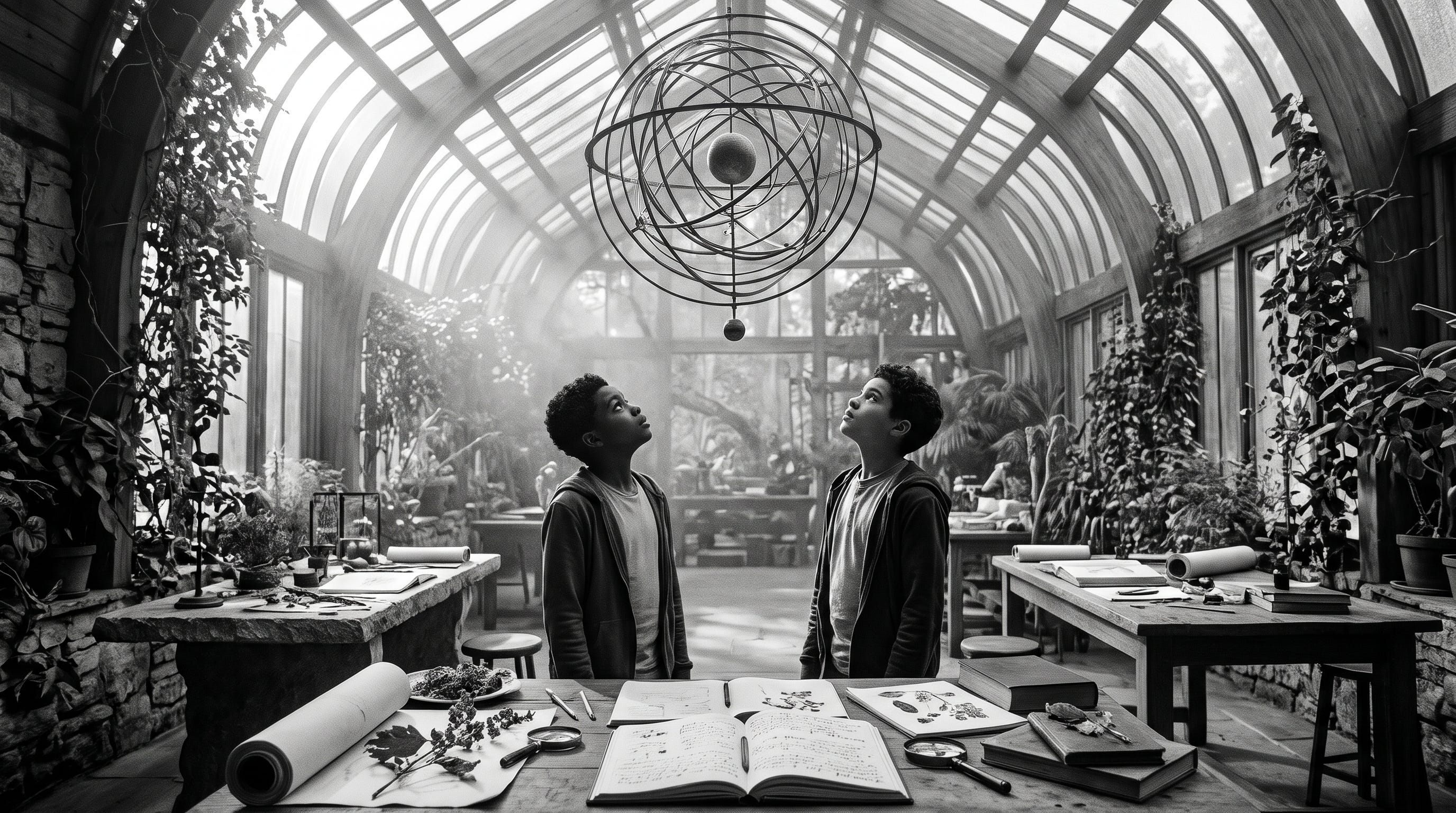
The theme of the day, seemingly unlikely to some but considered so necessary by many people I spoke to across the world, focused on the Beauty in Learning. The theme was chosen because, too often education systems that become more transactional and too focused on passing or excelling in exams, the beauty of the act of learning, and what learning means or represents has become obfuscated. Yet, it may well be the beauty in learning that makes learners and teachers who see and experience it, strive and carve their paths to flourishing.
We listened to amazing speakers; we heard the voice of learners and were mesmerised and challenged by what they shared with us and the delegates. They enriched our dialogue, in which we listened to people with different perspectives and refreshing ideas on the profoundly human process of learning.
In an era in which learning is no longer what distinguishes us as a species, this topic becomes even more important as machines excel at, and surpass us in what we believed to be at the core of our humanity, we who considered ourselves at the top of the chain of life. The dice have been cast, urging us on a quest to reinvent and rethink what learning and its beauty mean in this new paradigm of a human-machine world of knowledge and being.
The discussion below highlights what happened during the day and makes a few recommendations to consider for the future of learning and education.
Moving beyond an unbeautiful Place
In her welcome, Vicky Bingham, head of NLCS, reminded us of the importance of the Dialogues for the Future of Learning and Education. They offer perspectives on learning, not tidy solutions. They allow us to frame education “not head on like a rugby tackle, but in balletic sideways moves”. Even so, they must prove practical, and they are.
Her vivid, and profound reflection on the importance of beauty in learning not only set the tone for the day but also inspired this piece. I trust the summary below will inspire reader too.
Reading Saint-Exupéry’s Vol de Nuit at school, a passage in which a doomed pilot rises above a storm into moonlit stillness, brought her a moment of beauty. The teacher never knew the importance of that moment and its beauty, a beauty in itself. Such beauty belongs to every subject, including maths.
Beauty can be found in all subjects, yet it is increasingly viewed as a luxury in British Schools. This is mostly observed in how state education has made swingeing cuts to performing and creative arts. Universities are laying off staff in the humanities, and rates of reading in teens and adults are declining. And schools all too often are cut off from the natural world, educating children in soulless buildings. Reports and statistics suggest that students are applying to university for “transactional reasons”, worried about what the future holds, at times even going as far as viewing scholarship itself as a luxury. Yet, “beauty takes young people beyond themselves and connects them to others. It furnishes their mind”. A question education hardly asks is whether learning lets pupils experience the transcendental.
Drawing on Plato and Martha Nussbaum, the question of beauty in learning is offered some answers. Plato believed that beauty shapes character before reason arrives. He feared its power, going as far as banishing the poets; “the greatest compliment art has even been paid”. Nussbaum takes the side of the poets, believing that being moved by art is itself a form of understanding. When a learner is moved, that is the learning.
For Plato beauty shapes who we become; for Nussbaum, it allows us to understand what argument alone cannot.
Resisting usefulness is a paradox of beauty. Aristotle, placing music in education for leisure, warned us that chasing utility doesn’t make us free. His word for leisure scholē is the root for our word “school”. It meant time to think, look closely and reflect. “One cannot be struck by something one hasn’t got the time to see.” Offloading thinking to machines erodes that attention. So does teaching that holds assessment as its focus, not leaving room to linger: “effective, but not exciting”.
An answer to what learning is for may be offered by Frank McCourt. In Angela’s Ashes, a teacher tells his impoverished class that no one can take away what they put in to their minds, encouraging them to furnish it with the best things they can find. The “mind as a palace, furnished with the best things that human beings have thought and letting them share in the wonder.” What could be more beautiful?
This profound introduction closed on humility. “Teachers rarely witness what lasts in their pupils, so what they offer should be beautiful: worth carrying for a lifetime, not useful for the next test.”

Beauty in Maths Learning
To many learners who feel maths is not for them, Beauty in Maths learning is an oxymoron. Yet Philipp Legner, founder of the award-winning maths learning platform, Mathigon and trustee of MoMath (the national museum of maths in New York City), MathsWorld in London and Dr Frost, proved otherwise.
To Philipp, maths is beauty and his platform tells its own story on that front. We witnessed Philipp’s artistry in Maths thinking, from journeys to solutions and how they translate into highly engaging learning journeys that reveal the inherent beauty of maths, unseen by many, but ready to be discovered by all learners and their teachers.
The beauty in maths learning tells its own story. Maths is prominent in theme park rides, Egyptian tombs, mapping the world, nature, … Maths shapes creativity and exudes visual and abstract beauty.
Learners frequently fail to see its beauty, as it is has become hidden by the approach to maths learning adopted in education systems. Its wonder has gone missing.
Education:
The Quest for the Human Telos
Professor Ann Kristin Glenster of Cambridge University’s Centre for Research in the Arts, Social Sciences and Humanities took us all by surprise. Starting with a short journey via the Greek philosophers, in particular highlighting Aristotle’s notion of human flourishing (eudaimonia), she raised the question of what beauty really is and what it means for education.
Professor Glenster’s recent work on AI, coming from the discipline of law, has led to an initiative in Cambridge that engages with affiliates globally: LOGOS. LOGOS focuses on Epistemic Rights. At its heart sits the research for the development a Learner Epistemic Rights Charter, a topic that got distinct attention at the Inaugural Cambridge AI in Education Summit, a week after our event.
In a session titled Towards a Learner Epistemic Rights Charter, she and her research colleagues presented their ongoing research towards a framework for identifying and protecting the conditions necessary for learning, curiosity, discovery, creativity and human flourishing in an AI-mediated world. These are the conditions representing beauty in learning and the ethos of education itself.
We heard that beauty can’t be beauty without purpose. This is exactly how beauty should be positioned at the heart of education, a fundamental quest for human purpose. It is in purpose, the telos of education itself, and in the protection of the conditions necessary for learning, that beauty lies.
Learning with Others across the World
What is more beautiful than communicating with others across the world and learning the language to do so, to understand culture, the other and tell one’s own story? This is what Little Bridge does with young learners across the globe.
Emma Rogers, a former teacher, illustrator of children’s books and passionate about education for all and bringing young learners together, has realised this passion through Little Bridge, an English Language Learning platform.
In her talk, Emma highlighted how drawing teaches one to look. It is not just a question of recognising or simply applying universal truths but noticing what makes something particular.
“Beauty, in that sense, begins with attention.” But what kind of attention, attention to what?
She described how she had become proficient in reading information about children: behaviour, attainment, reading level, needs, and other data. But what does this reveal? As with Magritte’s famous painting of a pipe: Ceci n’est pas une pipe, what these data reveal is not the child.
These insights may reveal what the child might need, they don’t tell her what sort of child she is dealing with. The description of need has become the prediction of potential. Once we believe we understand the kind of learner, we start deciding what opportunities are appropriate for that learner. Instead of opening a door to possibility, we fence in the learner to what we believe they are, not who they might become. After all, aren’t the beauty and purpose of education and learning that they engage in becoming?
“Language allows me to do something I couldn’t before.” This insight drove Emma to develop Little Bridge, a community connecting young people in which English stopped being the thing taught. Instead, it became the bridge,connecting and listening to another person. Expanding the child’s world is what makes learning beautiful.
Yet, there is serendipity in this beauty as it often emerges in the things not designed or considered. The unexpected question, the unusual solution, the mistake or even a child who refuses to take part in a learning activity but decides to create their own. We listened and saw an example of such an occurrence in Uruguay, where a ‘disaffected’ boy not interested in abstraction wanted to experience the world. With his classmates he built an imaginary town. They engaged in role playing in Little Bridge. Serendipity at work, beauty of creativity and finding the solution that worked for the group. A reminder of why we should be careful about “designing inefficiency out of learning”.
As tech allows us to know ever more about a child’s learning in a designed and personalised setting, we are at risk of narrowing the personalisation based on the prescriptive premise that we know the learner, so we know what suits them. This is in stark contrast with an expansive personalisation that works on the premise of getting to know the learner, so we can open more doors for the “child being a person becoming”, surprising the system.
This chimes with the explorer learner mode, discussed in our previous Dialogue on the Explorer Learner.
It is this quest for human ‘telos’ that should celebrate the beauty of becoming as a foundation for the future of learning and education.
Wonder
A highlight of the day. A group of Year 7 learners shared their experience of Wonder, a project they engaged in in Year 6. And what a project it proved to be.
Starting with “I wonder…” learners were invited to explore a deep question that resonated with their main interest. These weren’t simple questions; they would fall squarely the realm of “wicked”.
Learners stunned us with the nature of their questions about anxiety, sustainability, neuroscience, sports as a catalyst for widening participation and equality, climate, wellbeing, the arts, space exploration and so much more.
Beneath the variety of questions ran two common threads: happiness and discovery. This was enhanced by the desire to what makes life good and what lies beyond what we already know.
Prompted and challenged by Robin Street, North London Collegiate School’s Director of Innovation, the learners made clear how much they valued personal research as a key to the exploration into what they really wondered about. A more poignant illustration of explorer mode and beauty in learning through rigorous discovery and embracing failure.
This relied on learners having to formulate carefully what they wondered about. They had to discover how to research and do that well, immersing themselves deeply in their questions as well as working with others. This process opened them up to opposing and unexpected views, something they might otherwise have dismissed, even rejected. They valued this hugely.
The learners were asked to deliver a detailed write up on their findings and possible answers and conclusions. If the research couldn’t fully deliver what they needed, they had to describe why this was the case. Or, having embarked on a journey that was anything but plain sailing, they had to rethink their approach altogether when hitting a roadblock or experiencing failure.
To say you could hear a pin drop would be an understatement. Awe and wonder only increased as the discussion deepened and we heard that research and write-ups could not involve (Gen)AI, and the output had to be hand-written.
When challenged on whether AI wouldn’t have made the job easier, the learners were unanimous. They weren’t keen; they could see its value, but only as a tool. They did not want their thinking substituted by a machine.
A learning journey like no other, demonstrating the beauty of the act of learning, its friction, its setbacks and reflection. A deliberation on how creativity and freedom to explore feed each other. When given room to wonder, learners surprise us all and often exceed themselves.
An echo of the transcendence reflected on in the Head’s welcome message.
My Learning Journey:
Music, Composing, Playing
Lewis Campbell was experimenting with music at a very young age. Encouraged to be curious, he discovered the beauty of music as a path for him to embark on. Playing music, writing his own music and growing in proficiency he was accepted at The BRIT School, a school for highly talented young musicians and performers and creative artists.
The BRIT School expanded Lewis’s musical horizons and his own experience of music and what it meant to him; a place of experimentation in which community plays a critical role. It was the community that made it special.
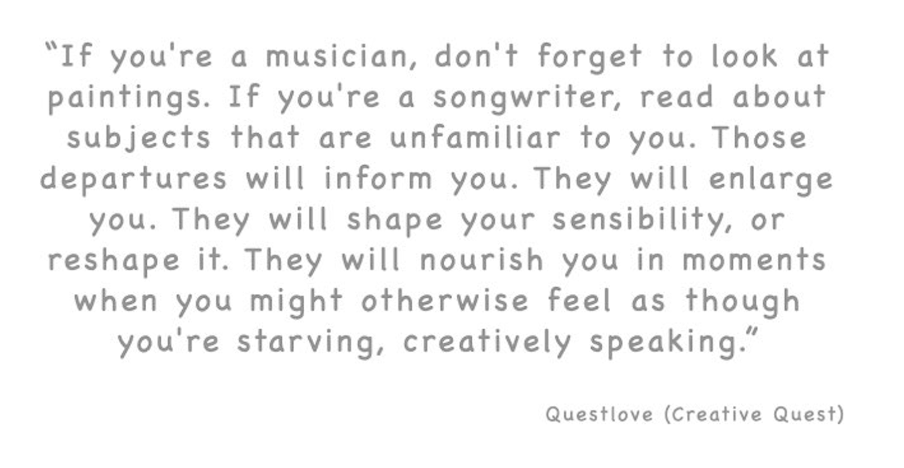
But learning to look beyond music and the familiar and, first and foremost “to do the thing”, which is instrumental to creation. Whatever it is you are considering, do the thing. Whether that leads to failure or not. More often than not, failure is the experience that leads to growth in doing the thing.
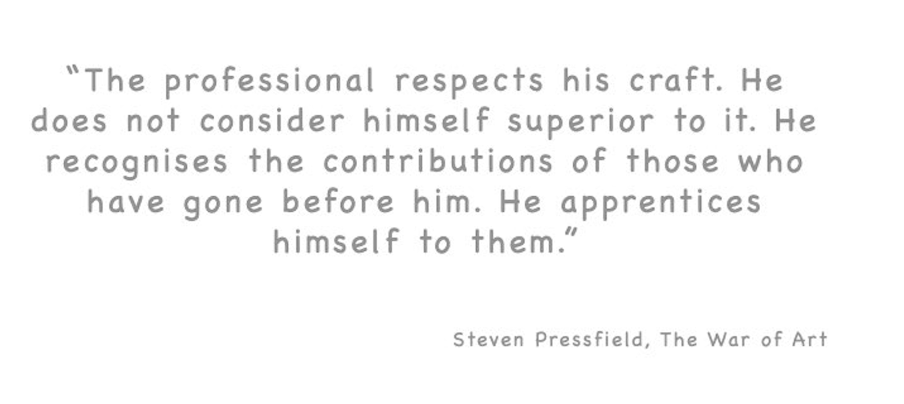
But doing the thing does not come alone: it requires instinct and intention. Above all, it also requires the humility and recognition of those who have come before one. They have paved the way that today’s musicians, performers and artists can grow and build on. Our creativity and music making is not just our own; it is the continuation of those who have come before us and on whose shoulder we stand in our own journey, becoming the apprentices to their art and craft.
When learning music and playing together we experience the beauty of teaching each other and not just being taught by our teachers, but discovering how we teach those we play with as well as learn from them. It is this exchange between learning and teaching that has its own beauty.
What matters most is to “Never Stop” doing the thing, the teaching, learning from those before us and looking beyond what we do, to do it better.
The Beauty of Learning in Dance
A fireside chat with Benoit Swan Pouffer, Artistic Director Rambert
In a reflective and inspiring fireside chat, witnessed by a group of learners, Benoit and Robin Street explored the beauty of learning in dance and the beauty of dance performance.
The scene was set with a clip from the highly acclaimed Rambert Peaky Blinders production, a production that stems from a journey into dance, which started in an unlikely place. With no family background in dance and raised by a single mum, Benoit was drawn to movement early on. His talent took him to the Conservatoire National Supérieur de Musique et Danse in Paris, France’s foremost school of music and dance, and he continued to be shaped at the Paris Opera. Touring the world as principal dancer with the Alvin Ailey American Dance Theater, his experiences have led Benoit to Rambert and the productions he creates as Artistic Director.
His path from outsider to the heart of the profession colours how he sees dance. For Peaky Blinders, he cast a South African dancer he discovered on Instagram, whose missing leg brought a fluidity and storytelling that capture how Benoit considers choreography: not the pursuit of a perfect body, but an openness to what everyone’s body can bring to dance and movement.
“We all live in a body”. This body tells our story through how we sit, walk and move, long before we speak. Dance gives that unspoken power a voice. It does this through illusion, which is where its magic and beauty lie.
A warning on the romanticising of beauty quickly surfaced in the conversation. Conformity may have its appeal, but its mould can be destructive. Beauty for the sake of beauty soon turns dull. Performances are lifted by “intellectual beauty”, a transcendental quality that intelligent dancers bring beyond the shape they make. It is a beauty that one finds in other disciplines too, mathematics amongst them. Aristotle sat in the background.
Learning is inherent in this beauty. It means trying everything, even the things that one dislikes or doesn’t see the point of. Mistakes and discomfort lead further than success. Failure and vulnerability should be embraced, rather than feared, becoming a source of strength. A conviction that informs his latest production, It’s a Sin, now in rehearsal, which revisits the AIDS era of the 1980s seen through the eyes of a new generation.
Testing his work on children is critical. “They have no filters and will tell you as it is.”
Dialogue on the Beauty in Learning
The Beauty in Learning event culminated in dialogue, in which speakers, attendees and learners focused on the question, discussing what beauty in learning means for imagining the future of learning and education. Working in groups and sharing the findings, participants surfaced key themes that once more highlighted how difficult it is to imagine a future of education that isn’t baked into its current paradigm.
What transpired in the dialogue can amount to recommendations for policy makers, educators and other stakeholders in education.
The Core Purpose of Education and Human-Centred Learning
Education must extend beyond rigid, transactional, measurable outcomes. It should cultivate core life skills, self-understanding and nurture intrinsic curiosity.
Learning should be human-centred and allow for a cycle of progression from discovery to curiosity and sustained drive that is agency led.
Although specialised pathways like A-Levels foster deep subject inquiry, broader approaches and frameworks should be favoured that allow for and encourage multi-disciplinary exploration, preventing narrow specialisation. (International Baccalaureate, some US-based as well as European education systems favour broader curricula, not all of them favour multi-disciplinary exploration, which is what learners are asking for.)
Environment, Space, and Resilience
Intellectual beauty thrives on passionate and compassionate teaching that moves away from static classroom experiences and resources. Physical environments should be open and non-segregated. They should bring together ages and stages to encourage cross-cohort co-creation, collaboration and peer mentorship.
Crucially, learning cultures must reframe failure and adopt it as an essential iterative mechanism that fosters psychological resilience and dismantles the demands of high-stakes perfectionism, bringing meaning to learning.
Pedagogy, Agency, and Assessment Reform
Experiential pedagogy connects academic study to real-world issues. It teaches learners how to think rather than what to memorise, entering into dialogue with learning, themselves, their teachers and the spaces the dialogue creates between them.
High-performing systems balance learner agency, supported by independent research (such as the EPQ), with relational mentorship. This cannot be achieved through high-stakes exams; it requires assessment to shift from rigid mark schemes towards coursework documenting lines of thought, focus on learning processes, oracy and conversational evaluations of real-time cognitive reasoning.
Furthermore, dedicating non-negotiable time to creative and physical disciplines encourages the development of new and distinct neural pathways that abstract study alone cannot achieve.
Digital Integration and the 2030 Vision
Digital networks and social media should be integrated into teaching and curriculum through explicit provision of AI and algorithmic literacy, and framing technology as a medium to develop the mind rather than a replacement for critical thought.
The dialogue sought to address state-school equity and staffing pressures, suggesting three core pillars for 2030:
Leading by Passion: Transitioning to child-centred learning liberated from external, system or parental projections and expectations or performance metrics and predictions.
Removing Time Pressures: Diversification of core subjects, reducing over-packed schedules, and setting aside more time for creative exploration.
Preserving Human Connection: Safeguarding physical, face-to-face interaction as the irreplaceable foundation of education.
It is with these findings and recommendations that the day came to an end.